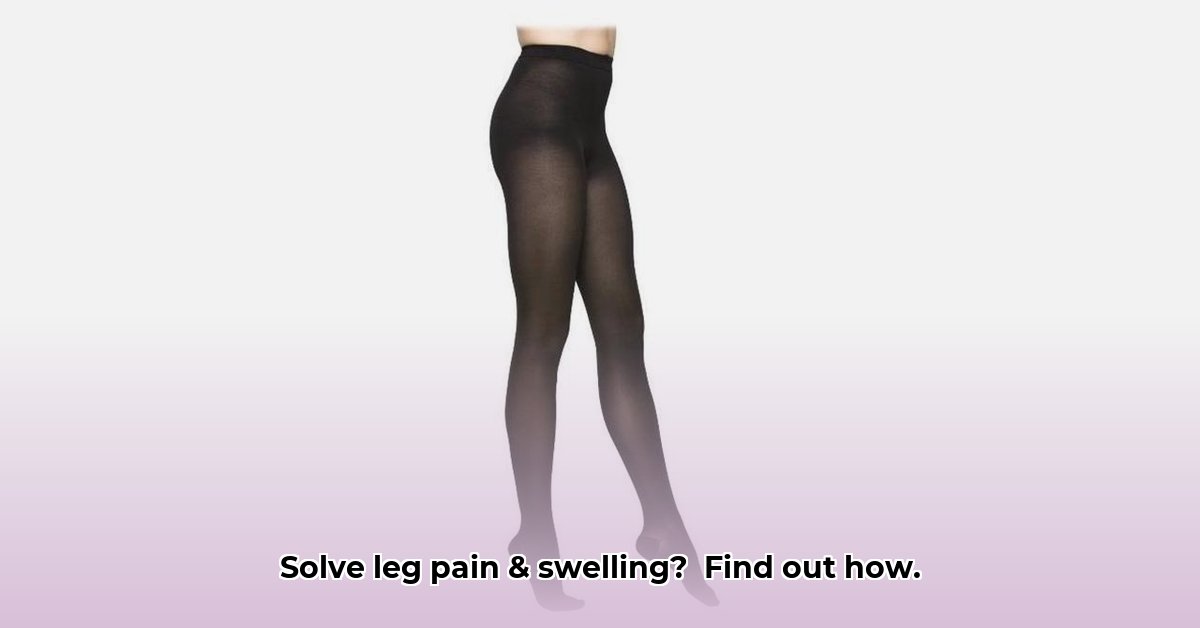
Understanding the Importance of Choosing the Right Compression Stockings
Leg discomfort and venous disorders affect many, impacting comfort and overall well-being. Effective treatment often involves compression stockings, but choosing the right kind is crucial. This guide clarifies the differences between regular support stockings and medical-grade compression stockings, helping you make informed decisions about your leg health. Ignoring the subtle but significant differences between these types of stockings could lead to ineffective treatment, or even worsen your condition.
Medical-Grade vs. Over-the-Counter: Key Differences
The primary distinction lies in graduated compression. Medical-grade stockings apply stronger pressure at the ankle, gradually decreasing towards the knee and thigh. This targeted pressure assists blood flow back to the heart, improving circulation. Over-the-counter stockings may offer some compression, but lack this precise, therapeutic gradient. It's akin to comparing a finely-tuned engine (medical-grade) to one with inconsistent performance (over-the-counter). The finely-tuned engine consistently delivers optimal results, while the other may falter.
Finding the Right Fit: A Step-by-Step Guide
Selecting the correct compression stockings is a collaborative process. Here's a structured approach:
Consult Your Physician: This is not a self-treat condition. Your doctor will assess your specific needs and recommend the appropriate compression level (measured in mmHg – millimeters of mercury). They will also determine if compression therapy is appropriate for your individual situation.
Precise Measurements: Accurate leg measurements are paramount. Improper sizing renders the stockings ineffective and potentially harmful. Your doctor or a healthcare professional will take these measurements to ensure a proper fit. A poorly fitted stocking is akin to wearing shoes that are two sizes too small – uncomfortable and ultimately ineffective.
Material Selection: Comfort and durability are critical for daily wear. Look for breathable fabrics that minimize skin irritation. Your physician can provide guidance on material choices based on your skin sensitivity and any allergies you might have.
Proper Application: Applying and removing compression stockings correctly is essential to prevent damage to the stockings and potential harm to yourself. Your physician or a healthcare professional will demonstrate the proper technique.
Ongoing Care and Maintenance: Regularly inspect your stockings for wear and tear, adhering to the manufacturer’s cleaning and care guidelines to maximize their lifespan and effectiveness.
The Long-Term Benefits of Medical-Grade Stockings
Investing in medical-grade stockings is an investment in your long-term health. While the initial cost is higher than over-the-counter options, they offer sustained relief and can help prevent serious complications associated with venous insufficiency. This preventative aspect can lead to significant long-term cost savings by reducing the need for more extensive and expensive treatments down the road. This is akin to preventative car maintenance: while it may seem costly upfront, neglecting it can lead to far more expensive repairs later.
Comparison: Medical-Grade vs. Over-the-Counter Stockings
This table summarizes the key differences:
| Feature | Medical-Grade Stockings | Over-the-Counter Stockings |
|---|---|---|
| Compression | Precise, graduated compression | Inconsistent compression |
| Material Quality | Durable, breathable, often hypoallergenic | Variable quality, potentially irritating materials |
| Effectiveness | Clinically proven to improve venous health | Limited evidence of significant therapeutic benefits |
| Cost | Higher initial cost | Lower initial cost |
| Long-Term Costs | Potentially lower overall healthcare costs | Higher potential for long-term healthcare costs |
Frequently Asked Questions (FAQs)
Q: Will insurance cover medical-grade stockings? A: Coverage depends on your specific plan and medical necessity as determined by your physician. Consult your insurance provider and your doctor.
Q: How long do compression stockings last? A: With proper care, a good pair should last several months. However, effectiveness diminishes over time, necessitating replacement as advised by your healthcare provider.
Q: What if I experience skin irritation? A: Discontinue use immediately and consult your doctor. Irritation may indicate an allergic reaction or improper fit.
Choosing the Best Medical-Grade Compression Stockings for Venous Insufficiency
Key Takeaways:
- Medical-grade compression stockings effectively alleviate venous insufficiency symptoms.
- Proper selection involves understanding compression levels (mmHg) and graduated compression.
- Consulting a healthcare provider is essential for safe and effective use.
- Consider fit, material, and lifestyle when choosing stockings.
- Regular replacement maintains therapeutic efficacy.
"Choosing the right compression stocking is a critical part of managing venous insufficiency," says Dr. Anya Sharma, Vascular Surgeon at University Hospital. "Working with your physician to determine the appropriate level of compression and fit is crucial for optimal outcome."
Understanding Venous Insufficiency and Compression Therapy
Venous insufficiency arises from impaired blood return to the heart, causing leg swelling, pain, and varicose veins. Medical-grade compression stockings counteract this by gently squeezing the legs, improving circulation. Selecting the appropriate type is crucial for treatment efficacy. Are you noticing leg swelling or discomfort? It's time to address the underlying cause, and proper compression therapy may be the solution.
Compression Levels: The Significance of mmHg
Compression levels are measured in mmHg. Different levels address varying needs: lower compression (15-20 mmHg) provides mild support, while higher levels (30-40 mmHg or more) treat more severe conditions. Your doctor determines the appropriate level for your condition. Don't underestimate this vital aspect of choosing the right compression stocking. It is the cornerstone of successful venous insufficiency treatment.
Graduated vs. Uniform Compression: A Vital Distinction
Most medical-grade stockings utilize graduated compression—stronger pressure at the ankle gradually decreasing upwards. This mimics your leg muscles' pumping action, optimizing blood return. Uniform compression applies equal pressure throughout the stocking. While useful in some contexts, graduated compression is generally superior for venous insufficiency. Understanding this fundamental difference is crucial for selecting the most effective compression stocking.
Selecting the Right Fit and Material
Comfort is vital for consistent use. Ill-fitting stockings limit effectiveness and cause discomfort. Precise measurement is key. Reputable medical supply stores offer professional fitting services. Material selection impacts comfort and durability; consider breathability, moisture-wicking properties, and overall durability.
Step-by-Step Guide to Selection
Consult your physician: Obtain a proper diagnosis and recommendation for appropriate compression levels (mmHg).
Professional Fitting: Get professional fitting at a medical supply store or with a healthcare provider experienced in fitting compression stockings.
Consider your Lifestyle: Choose stockings suitable for your activities – breathable for daily wear, durable for prolonged use.
Regular Replacement: Replace stockings as needed to maintain their effectiveness. The life expectancy varies depending on the type of stocking and how often they are used.
FAQs (Continued)
Q: Are support stockings the same as medical-grade compression stockings? A: No, support stockings offer only mild compression, whereas medical-grade stockings provide therapeutic compression levels.
Q: Can I buy medical-grade stockings without a prescription? A: Lower compression stockings (generally below 20 mmHg) may be available over-the-counter. Higher compression levels usually require a prescription.
Q: How should I care for my compression stockings? A: Hand washing is typically recommended to preserve elasticity. Always refer to the manufacturer’s care instructions.